
PTE Score Changes 2026: New 65 in PTE & 79 in PTE (for Australia)
We built a FREE Tool to help you understand the New PTE Score Changes & Marking
(just click the pic below to try it)

How to Score 65 in PTE Academic: Updated Strategies for 2026
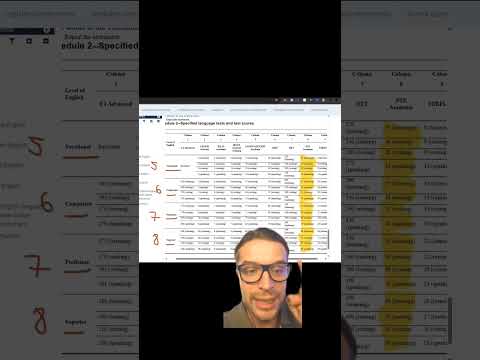
The question “how to score 65 in PTE Academic” needs to be completely reframed after the Australia immigration PTE score changes. You’re no longer aiming for a uniform 65 – you’re aiming for skill-specific targets that vary dramatically.
For Proficient Level Success (New Requirements):
Listening Strategy (Target: 58): This is now your “easiest” skill to achieve Proficient level. Focus on Summarize Spoken Text, Multiple Choice questions, and Fill in the Blanks. The 7-point reduction means students who previously struggled with 65 can now achieve their target with focused practice on high-scoring question types.
Reading Strategy (Target: 59): Similar to Listening, this 6-point reduction makes Proficient level much more achievable. Concentrate on Multiple Choice Single Answer, Re-order Paragraphs, and Fill in the Blanks. Time management becomes crucial – don’t get stuck on difficult passages.
Speaking Strategy (Target: 76): This is where the PTE new pattern 2026 becomes challenging. An 11-point increase means you need near-perfect performance in Read Aloud, Repeat Sentence, and Describe Image. Fluency and pronunciation are now more critical than ever. You cannot afford to have hesitations, false starts, or unclear pronunciation.
Writing Strategy (Target: 69): The 4-point increase means your essays need to be more sophisticated. Focus on complex sentence structures, advanced vocabulary, and flawless grammar. Summarize Written Text becomes even more important as it contributes to both Reading and Writing scores.
The New Reality: You can no longer rely on being “good enough” across all skills. The PTE requirement changes mean you need to be strategic about where you invest your preparation time. If you’re naturally strong in Listening and Reading, you can focus more energy on Speaking and Writing where the bars have been raised.
Is 65 PTE Easy to Score? The Honest Assessment
After working with thousands of students through these Australia immigration PTE score changes, I can give you an honest answer to “is 65 PTE easy to score?”
The short answer: It’s become easier for some students and harder for others, depending on your natural strengths and weaknesses.
It’s easier if you:
• Have strong listening comprehension skills (7-point reduction to 58)
• Are a fast, accurate reader (6-point reduction to 59)
• Struggle with speaking but are solid in other areas
• Have been consistently scoring in the 58-65 range in Listening/Reading
It’s harder if you:
• Have speaking anxiety or pronunciation issues (11-point increase to 76)
• Struggle with writing complex sentences (4-point increase to 69)
• Were previously achieving Proficient level with balanced 65+ scores
• Rely heavily on Speaking scores to boost your overall performance
The PTE new pattern 2026 has essentially created a more realistic but specialized scoring system. It acknowledges that different language skills require different levels of proficiency for real-world success, but it also means you can’t coast on your strongest skill anymore.
Here’s what I tell my students: if you were consistently scoring 60-64 in Listening and Reading but struggling to hit 65, the new system is your friend. But if you were relying on strong Speaking scores to compensate for weaker Reading/Listening, you’ll need to completely restructure your preparation strategy.
The 79 Score Reality: What Superior Level Means Now
The changes to the 79 score requirement are even more dramatic than the Proficient level adjustments. If you’re targeting Superior level for maximum migration points, the PTE requirement changes have created both opportunities and significant challenges.
New Superior Level Requirements:
• Listening: 69 (down 10 points from 79)
• Reading: 70 (down 9 points from 79)
• Speaking: 88 (up 9 points from 79!)
• Writing: 85 (up 6 points from 79)
The Speaking requirement jumping to 88 is absolutely massive. This means you need near-perfect performance in every Speaking task. There’s virtually no room for error – every Read Aloud must be flawless, every Repeat Sentence must be perfect, and every Describe Image must demonstrate native-like fluency and pronunciation.
But here’s the opportunity: if you’re naturally strong in Listening and Reading, achieving Superior level in these skills has become significantly more attainable. A 10-point reduction in Listening and 9-point reduction in Reading means students who previously couldn’t break through the 79 barrier now have a realistic path to Superior level.
I’ve had students who were stuck at 75-78 in Listening suddenly achieve Superior level under the new requirements. The same applies to Reading – complex academic passages that previously required 79-level performance now only need 70-level comprehension.
After 7 August PTE Score Changes: What This Means for Your Timeline
One of the most important aspects of the after 7 August PTE score changes is the timing element. The Australian Department of Home Affairs has been very clear about when these new requirements apply, and understanding this timeline could save you from unnecessary stress and expense.
If you took your PTE test BEFORE August 7, 2025: The old requirements still apply to your scores, even if you submit your visa application after August 7. This means if you scored 65 in each skill before the changes, you still qualify for Proficient level under the old system.
If you take your PTE test ON or AFTER August 7, 2025: The new requirements apply, regardless of when you submit your application.
This timing rule has created some interesting strategic considerations. I had students who were scheduled to take PTE in late August who actually rescheduled to early August to take advantage of the old system, particularly if they were strong in Speaking but weaker in Listening/Reading.
Conversely, students who were consistently scoring 58-64 in Listening and Reading but couldn’t break 65 were advised to wait until after August 7 to take advantage of the lower requirements in these skills.
The Research Behind the Australia Immigration PTE Score Changes
Understanding why these PTE requirement changes happened helps explain why the new system is actually more fair and realistic than the old uniform requirements.
Pearson conducted a comprehensive score concordance study involving 1,522 participants to determine how PTE scores correlate with real-world English proficiency across different skills. The research revealed what language teachers have known for years: different language skills develop at different rates and require different levels of mastery for effective communication.
Key Research Findings:
Speaking Proficiency: The study found that effective oral communication in professional and academic settings requires higher precision than previously recognized. Pronunciation, fluency, and oral fluency contribute more significantly to overall communicative competence than the old scoring system reflected.
Listening Comprehension: Conversely, the research showed that the listening requirements were unnecessarily high. Students who could effectively comprehend academic and professional spoken English were being penalized by requirements that exceeded real-world needs.
Reading Skills: Similar to listening, reading comprehension requirements were found to be inflated. Students who could successfully navigate complex academic texts were failing to meet visa requirements due to artificially high score thresholds.
Writing Competency: The modest increase in writing requirements reflects the importance of written communication in professional settings, particularly for skilled migration categories.
The research concluded that approximately 90% of test-takers would achieve the same or higher visa category under the new system, making it more accessible while maintaining the integrity of English proficiency standards.
PTE New Pattern 2026: Strategic Preparation Approaches
The PTE New 2026 Pattern requires completely different preparation strategies than what worked under the old system. Here’s how to adapt your study plan to maximize your chances of success under the new requirements.
Skill-Specific Preparation Strategies:
Listening Preparation (Target: 58 for Proficient, 69 for Superior):
With the reduced requirements, Listening has become your strategic advantage. Focus on high-scoring question types like Summarize Spoken Text (worth up to 10 points) and Multiple Choice Multiple Answer. Don’t waste excessive time on perfect scores here – achieve your target and invest extra energy in Speaking preparation.
Reading Preparation (Target: 59 for Proficient, 70 for Superior):
The 6-point reduction means you can afford to miss some difficult questions. Prioritize time management over perfection. Focus on Re-order Paragraphs and Fill in the Blanks, which offer more predictable scoring than Multiple Choice questions with academic passages.
Speaking Preparation (Target: 76 for Proficient, 88 for Superior):
This is where the Australia immigration PTE score changes demand the most attention. The 11-point increase to 76 means you need near-perfect performance. Every Read Aloud must demonstrate clear pronunciation and appropriate pacing. Every Repeat Sentence must be word-perfect with natural intonation. Describe Image requires fluent, well-structured responses with appropriate vocabulary.
Practice speaking for at least 2 hours daily, focusing on pronunciation drills, fluency exercises, and template mastery. Record yourself regularly and identify specific areas for improvement. Consider working with a pronunciation coach if you have persistent accent issues.
Writing Preparation (Target: 69 for Proficient, 85 for Superior):
The 4-point increase means your essays need more sophisticated language and structure. Focus on complex sentence patterns, advanced vocabulary, and flawless grammar. Summarize Written Text becomes even more critical as it contributes to both Reading and Writing scores.
Practice writing essays with varied sentence structures, advanced transitional phrases, and discipline-specific vocabulary. Ensure your conclusions are strong and your arguments are well-developed with specific examples.
Common Mistakes Students Make with the New Requirements
Since the PTE requirement changes took effect, I’ve noticed several common mistakes that are preventing students from achieving their target scores under the new system.
Mistake #1: Preparing for the Old Requirements
Many students are still using preparation materials and strategies designed for the uniform 65/79 system. They’re spending equal time on all skills instead of focusing extra attention on Speaking and Writing where the requirements have increased.
Mistake #2: Underestimating the Speaking Challenge
The jump from 65 to 76 in Speaking is massive – it’s not just about practicing more, it’s about achieving near-perfect performance. Students who could previously get away with minor pronunciation errors or slight hesitations now find themselves falling short of Proficient level.
Mistake #3: Over-preparing for Listening and Reading
While it’s important to achieve your targets in these skills, spending excessive time trying to score 75+ in Listening when you only need 58 is inefficient. That extra study time should be invested in Speaking preparation.
Mistake #4: Ignoring the Timing Advantage
Students who took tests before August 7 but didn’t achieve their targets are retaking under the new system without considering whether their score profile would actually benefit from the changes.
Mistake #5: Not Understanding Skill-Specific Strategies
The 2026 PTE pattern requires different approaches for different skills. Using the same intensive preparation approach for all skills is no longer effective.
Is It Hard to Get 65 in PTE Under Different Visa Categories?
The answer to “is it hard to get 65 in PTE” varies significantly depending on which visa category you’re targeting and what “65” actually means under the new system.
For Skilled Independent Visa (189):
If you’re targeting Proficient level for maximum points, you need 58 Listening, 59 Reading, 76 Speaking, and 69 Writing. The Speaking requirement makes this challenging for most students, but the reduced Listening/Reading requirements provide some relief.
For Skilled Nominated Visa (190):
State nomination requirements vary, but most states accept Proficient level. The new requirements mean you might qualify with lower Listening/Reading scores than before, but Speaking becomes the make-or-break skill.
For Temporary Skill Shortage Visa (482):
Most occupations require Vocational level, which has become more accessible with the new requirements: 33 Listening, 36 Reading, 24 Speaking, 29 Writing. The Speaking requirement actually decreased significantly for this category.
For Student Visas:
University requirements vary, but many institutions still use the old terminology. It’s crucial to check whether they’ve updated their requirements to reflect the Australia immigration PTE score changes.
The Future of PTE Scoring: What These Changes Mean Long-Term
The PTE requirement changes represent more than just adjusted score thresholds – they signal a fundamental shift toward more nuanced, skill-specific English proficiency assessment.
Implications for Test Preparation:
The uniform preparation approach that worked under the old system is obsolete. Future PTE preparation will need to be highly specialized, with different strategies and time allocations for different skills based on individual student profiles and target requirements.
Impact on Migration Patterns:
Students with strong receptive skills (Listening/Reading) but weaker productive skills (Speaking/Writing) will find certain visa pathways more accessible. Conversely, students who previously relied on strong Speaking scores may need to reconsider their migration strategies.
Educational Institution Responses:
Universities and colleges are gradually updating their English proficiency requirements to reflect the new scoring system. This process will likely continue throughout 2026 and into 2027.
Industry Standardization:
Other English proficiency tests may follow PTE’s lead in adopting skill-specific requirements rather than uniform thresholds, potentially revolutionizing how English proficiency is assessed globally.
Ready to Master the New PTE Requirements?
The Australia immigration PTE score changes have created both challenges and opportunities for students targeting Australian migration. Understanding what 65 points in PTE means under the new system, knowing whether 65 PTE is easy to score for your specific skill profile, and adapting your preparation strategy to the PTE new pattern in 2026 requirements are crucial for success.
The question “is it hard to get 65 in PTE” no longer has a simple answer because “65” no longer exists as a uniform requirement. Instead, you need to understand your target skill-specific scores and prepare accordingly.
If you’re serious about achieving your PTE goals under the new requirements, you need preparation strategies specifically designed for the after 7 August PTE score system. The old methods won’t work, and generic preparation approaches will waste your time and money.
Want to master every aspect of the new PTE requirements with methods that actually work under the updated system? Join our comprehensive PTE coaching program where I personally teach you the skill-specific strategies that have helped thousands of students achieve their target scores under both the old and new systems. No outdated materials, no generic advice – just practical methods that get results under the current requirements.
These Australia immigration PTE score changes are permanent, and understanding them correctly is the difference between achieving your migration goals and facing unnecessary delays and expenses. The students who adapt quickly to the new requirements will have a significant advantage over those still preparing for the old system.
Don’t let confusion about the PTE requirement changes derail your Australian migration plans. Master the new system, understand your specific targets, and prepare strategically for success under the new PTE updates.
Ready to Master the New PTE Requirements?
The Australia immigration PTE score changes have created both challenges and opportunities, but one thing is certain: students who understand the new system and prepare strategically will achieve their target scores faster than those using outdated methods. Don’t let confusion about what 65 in PTE means under the new requirements delay your Australian migration dreams.
Want to master PTE in 2026 with methods that actually work? Join our comprehensive PTE coaching program where I personally teach you the skill-specific strategies that have helped thousands of students achieve their target scores under both old and new systems. No outdated materials, no generic advice – just practical methods that get results.
Ready to Master the New PTE Requirements?
If you are preparing for your exam and need a clear strategy to achieve these new scores, we are here to help. Our online coaching and practice platform are being updated with the latest techniques to target 88 in Speaking and 85 in Writing.
OR if you’re not sure whether you can pass or not – reach out to us for a FREE consultation 🙂
In the meantime, good luck with your preparation!
👉 Learn the NEW 2026 Strategies – check our Online PTE Coaching Packages
👉 For a FREE PTE Consultation – text our team on WhatsApp at: +61423058115
Check Our YouTube Video on this Topic: